The post Introduction appeared first on Jung.
]]>The post Introduction appeared first on Jung.
]]>The post Why is Jungianism important? appeared first on Jung.
]]>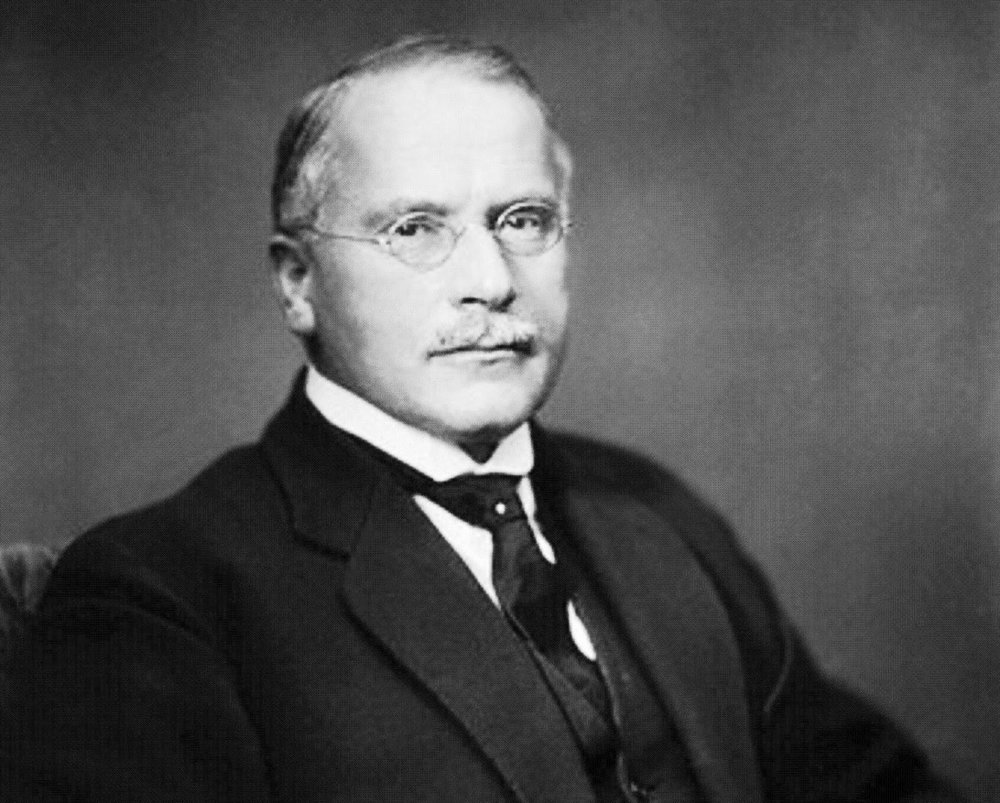
Carl Jung (1875-1961; pronounced “Yoong”) was a psychologist who worked when modern psychology was an emerging science. He studied under Freud, who found patients’ psychological problems often resulted from experiences earlier in life that were repressed into the subconscious. Jung noticed that some patients’ subconsciouses seemed to contain items that were not directly related to their lives. He set about trying to discover what other psychic contents might be in the subconscious.
What he learned in his research led him to label parts of the subconscious that did not come from an individuals’ direct life experiences. They were part of what he deemed the universal unconscious (i.e., they were not individual and they were not the subconscious that Freud was studying, which was based on personal lived experience). These included reoccurring stories, images, emotions, and patterns, which he called archetypes. And there was a part of the subconscious that seemed to consist of everything that the individual when in society was not: this he labeled the shadow.
He and others who followed him continued to explore these aspects of the mind and found how they went a long way toward explaining human behavior in ways that other explanations did not. As Joseph Campbell, one of Jung’s followers, once said, “an economic theory of human history could never explain a Chartres (Cathedral) 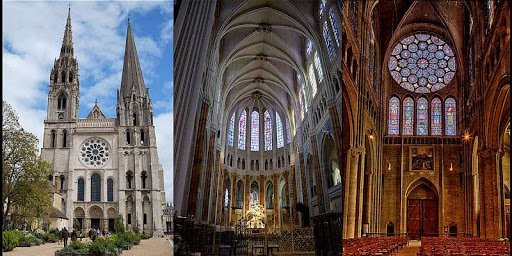 . Meaning: there is something else at work in humans than mere day-to-day concerns. Some universal unconscious aspect (I’ll call it here “a need for spirituality”) drove many people in Chartres for hundreds of years to come together to build a place of worship more magnificent than any business or home.
So then, what is in this universal unconscious that we all have inside of us? And how can it help us understand our own behavior and that of other humans? Let’s begin with two of the most important concepts/aspects: archetypes and the shadow. Understanding these two concepts is important to understanding the overall view of how the universal unconscious affects human experiences and behaviors.
The post Why is Jungianism important? appeared first on Jung.
]]>The post What are Archetypes? appeared first on Jung.
]]> One of the best known of Jung’s concepts is the archetype. Understanding the concept of archetypes is not simple because you cannot touch or see them. Jung said, “[T]hey can be recognized only from the effects they produce.” [“A Psychological Approach to the Trinity,” CW 11, par. 222, note 2.] 
Jung described archetypes as “… systems of readiness for action, and at the same time images and emotions. They are inherited with the brain structure – indeed they are its psychic aspect.” [“Mind and Earth,” CW 10, par. 53.]
“It is not … a question” Jung wrote, “of inherited ideas but of inherited possibilities of ideas. [“Concerning the Archetypes and the Anima Concept,” CW 9i, par. 136].  Archetypes are collective; “the effects they produce” are individual (according to Jung). So how can we show that they exist and what they are?
In a famous experiment, newborn baby bird chicks were separated from their mothers as soon as they were born so that they could not yet have been taught anything and could not yet have learned anything from experience. The researchers then flew over their heads cardboard cutouts of a bird that is not a predator of these little chicks, and they continued to peep for their mother. Then the researchers flew a cardboard cutout of a bird that is a predator of these chicks.  The chicks stopped peeping. The archetype of that predator bird’s shadow was inside each chick at birth, and it set off the behavior of being quiet so as not to be discovered and preyed upon. This image had been passed down because it was important for the animal to survive that the image be in the animals’ brain/mind to touch off the proper behavior when the experience arose. This to me is one of the best examples of both how archetypes act and proof that they exist.
The post What are Archetypes? appeared first on Jung.
]]>The post What is the Shadow? appeared first on Jung.
]]>Another Jungian concept is the shadow. Jung’s original definition was the “shadow is that hidden, repressed, for the most part inferior and guilt-laden personality…” [CW9 paras 422 & 423].1 
The word “shadow” for this concept is now commonly used to mean the negative side of someone’s personality, the parts of themselves of which they are unaware, or their negative or violent traits (though it may be another person’s or culture’s shadow defining as “negative,” as we shall see below). A distinction needs to be made between the shadow and how it is negatively manifested.
Most of the things you hear or read about the shadow commonly use words like negative, denied, ashamed, etc. Wikipedia’s entry on Jung’s concept of shadow has as the first line of the second paragraph, “Because one tends to reject or remain ignorant of the least desirable aspects of one’s personality, the shadow is largely negative.”  But Jung’s own definition went on to clarify, “If it has been believed hitherto that the human shadow was the source of evil, it can now be ascertained on closer investigation that … shadow does not consist only of morally reprehensible tendencies, but also displays a number of good qualities ” [CW9 paras 422 & 423].1 One of his most famous students, Maria Louise von Franz, cited a woman Jungian therapist who worked with some of the hardest criminals in jail and found that their shadows were incredibly positive.
When Jung described the shadow as “negative,” it was more in the sense of a photographic negative  or a negatively charged particle in physics
 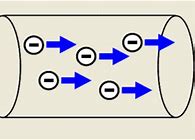 . Negative for him was a scientific term and not a judgment. It was negative in that it was not lived out or processed. It would be no truer with these words to say that everything one actually did in real life was positive in the sense of good. It is merely positive in the sense of being manifest like the positive image of a photographic negative: it has been brought to light.
- Jung CG. Shadow Definition. In: Read H, Fordham, M., Adler, G., McGuire, W., ed. Hull RFC, trans. The collected works of C.G. Jung Vol Vol. 9. 2nd ed. Princeton, NJ: Princeton University Press; 1969 (Original work published 1948):207-254.
The post What is the Shadow? appeared first on Jung.
]]>The post What are the Anima and Animus? appeared first on Jung.
]]>The anima or animus is a part of the psyche that is unconscious like the shadow. Unlike the shadow, which contains a series of archetypes denied that affect your behavior by erupting or projecting, the animus or anima is an image. The anima can be described as the (traditionally) feminine part of the male psyche. The animus is the (traditionally) masculine part of the female psyche. The anima is composed of the feminine qualities that men tend not to use or express a lot; for women, this is the same in reverse.
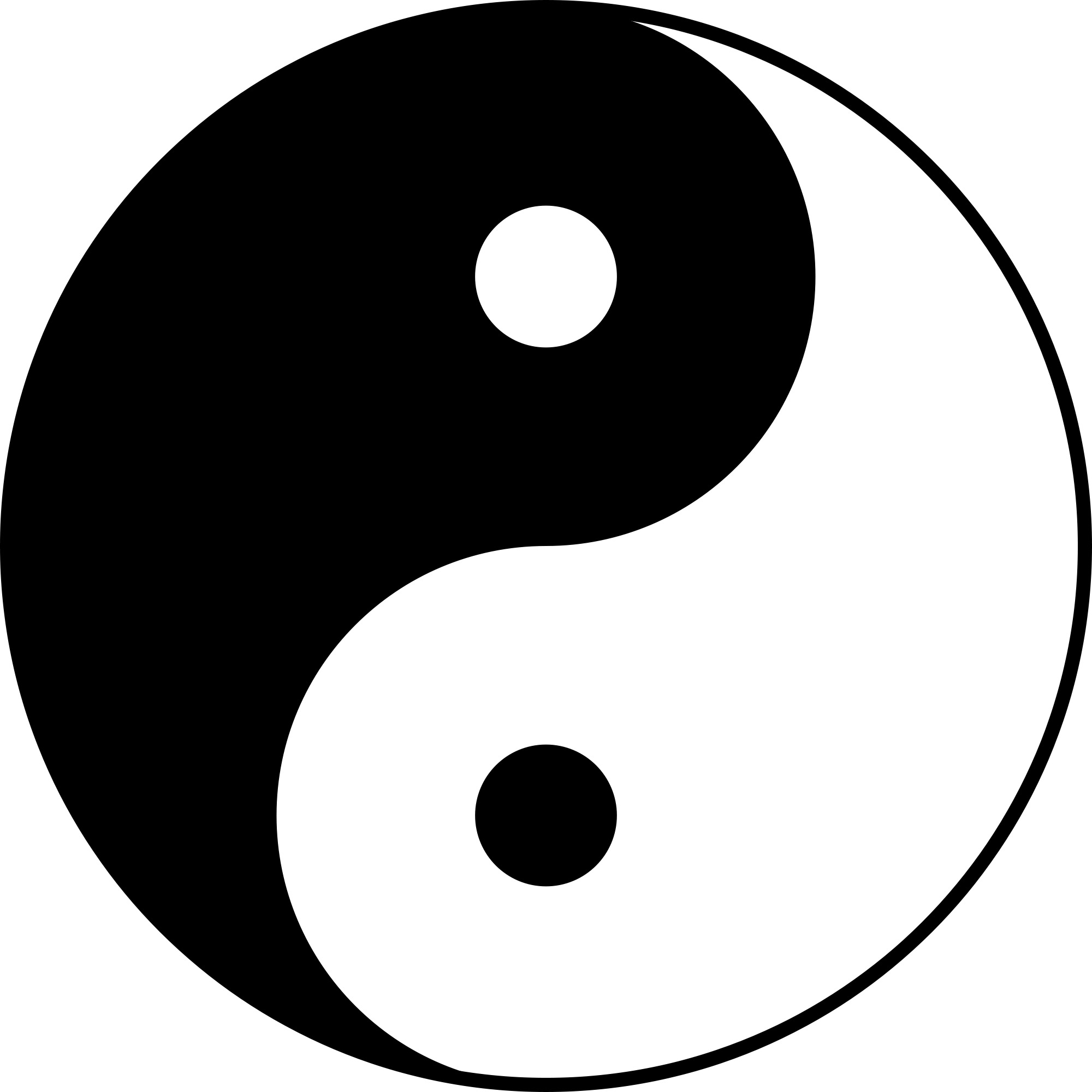
The famous Chinese yin/yang sign is a good example. The two side represent male and female. They narrow from wide to a single point to show that there is a wide range of how much male or female energy one has access to. But they each have a dot of the other inside
Whereas the shadow is highly individual, the anima or animus is biological and thus more universal. The animus or anima gets projected outward onto persons of the (usually) opposite sex but is closely related to who we choose as romantic partners. Whereas the shadow gets projected out as hate, the animus or anima gets projected out as love. The roles in romantic relationships are often projections of the traditional qualities associated with the opposite sex. A man may see a woman as seductress or saint. 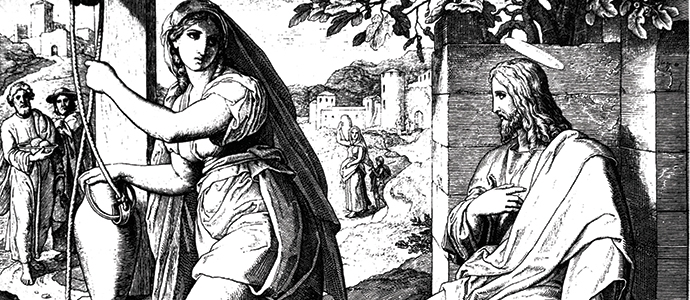
A woman may see her male lover as a hero or little boy. 
These may be precisely the roles that their inner opposites (anima and animus) would play for the individual. But because they are not lived out, they are projected outward.
The post What are the Anima and Animus? appeared first on Jung.
]]>The post What is Synchronicity? appeared first on Jung.
]]> There is another concept that you’ll hear a lot of Jungians mention: synchronicity. 
Jung used the term to note the co-occurrence of a psychic and physical event or of similar thoughts, dreams, etc. at the same time but in different places. One example is that a woman who he was treating who he wanted to let go of her intellect and get more in touch with her intuition was telling him about a dream she had in which a green beetle had appeared.  At that time in the therapy session, Jung noticed an insect banging against the window. When he opened the window, Jung found it was a green beetle. He presented it to the woman and said, “There is your green beetle.” It was a way for her psyche to let her know that there were things going on that could not be explained by her rational side.
To me, synchronicity is not as important as other Jungian concepts. The upshot is the inner and outer world are connected. The thing that I have always found overly stressed is that the two are very strongly connected or the assumption that the two are related by cause and effect. I have always felt that the inner process that is going on which involves an archetype is looking for an outer form to take. So when something happens in the real world that fits the archetype, it appears that the two are magically related. But to me, it’s the psyche seeing what it wants to see.
The post What is Synchronicity? appeared first on Jung.
]]>The post What is Individuation? appeared first on Jung.
]]> Individuation is what Jung called becoming aware of all these entities (archetypes, shadow, anima/animus) in your psyche and incorporating them into your conscious life: “the process by which a person becomes a psychological ‘individual,’ … an indivisible unity or ‘whole.’ . . . We could therefore translate individuation as . . . ‘self-realization.’” (CW 7, par. 266) 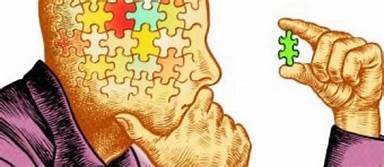
Part of what makes it hard for Western individuals to individuate is that it is common in the West for people to identify as only their public persona (ego) or what they believe they are. In fact, the unconscious parts of you define you just as much as the public or aware parts of you. When the individuation process is confused with identifying with the ego, one mistakes individuation for ego-centeredness. 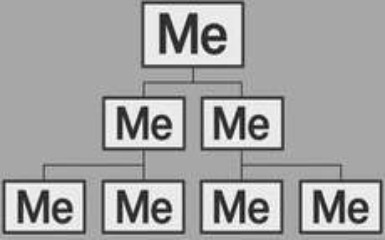 Individuation demands incorporating parts of your psyche you don’t want to admit are there: the shadow. Also, knowing the archetypes that you are living out teaches you about your individuality and thus helps you individuate. As John Beebe says in the intro to The Essential Jung, “although human psyches, like human bodies, share a basic structure, the individual psyche is ‘an endlessly varied recombination of age-old components’.” Learning your specific recombination is individuation.
This self-actualization includes self-awareness. Once you know your shadow, you can be on guard for it erupting into your life or being projected onto others. Once you know what archetypes “rule” your thinking and behavior, you can be on guard against “playing the role” that an archetype expects of you and can instead make a rational judgement or decision.
Individuation involves recognizing and putting to use many Jungian concepts and processes.
The post What is Individuation? appeared first on Jung.
]]>The post What is Association (Free Association)? appeared first on Jung.
]]>Freud was studying peoples neuroses, and he came to find that they were often related to repressed memories or experiences from someone’s past, or what he called the subconscious, where those things went to live once they were repressed. Jung, who saw something below the subconscious or not related to a specific person’s specific life experiences, labeled what he found the unconscious. but then he needed a tool to try to find out about the unconscious. What, like neurosis for Freud, would indicate the existence of what he was looking for: the unconscious?
He tried a process he called association. In our day, you may have heard it called “free association.” He would read a list of words and ask people to respond with the first word that came into their mind. 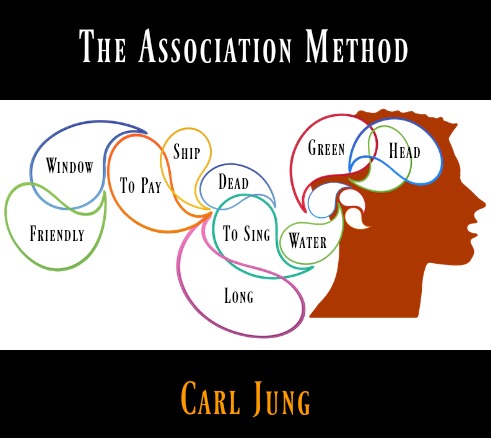 The things that were not related to the word would have come from some unconscious place. So, for example, the association of “white-black black-father” would indicate perhaps that there was something worth exploring in the person’s relationship with their father because “father” is not a common association with the word “black.” These instances of using the wrong word or a word that is not usually associated with whatever one is talking about have come to be called “Freudian slips.” I call them “Jungian slips.”
Association as a process has a role in many other Jungian concepts or ways of interpreting the world and/or learning about one’s self. Association allows one to “hear” archetypes. There is an old phrase, “Every problem looks like a screw if you have only a screwdriver, and a nail if you have only a hammer.” People’s conversations will be peppered with words that belie what psychic “tools” they have at hand: their archetype(s). Association allows one to “see” The Shadow. When people talk too negatively or positively about anything, it shows the shadow in either its pure form (projection of the negative) or its suppressed form (denial of the negative). Association thus is a tool to help you better understand yourself and others.
The post What is Association (Free Association)? appeared first on Jung.
]]>The post What is Amplification? appeared first on Jung.
]]>Amplification is a little like the process of association mentioned earlier. Amplification is looking at the images that you create and are surrounded by, amplifying them to their furthest range of archetypes and associating them with parallels from other areas of the humanities (religion, literature, etc.). It can be described as a form of creative imagination or guided imagination (guided by awareness of archetypes and shadow).
Amplification is a necessary process for individuation because when we are in the throes of a certain archetype or shadow or anima/animus image, we don’t know it (otherwise, we wouldn’t be at its mercy). 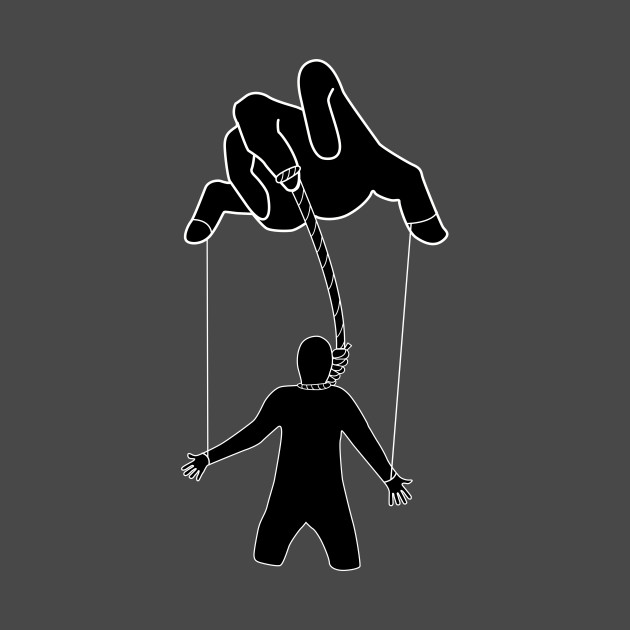 But by amplifying the images in our dreams and imagination and words, we can “figure out” what is going on psychically in our lives.
Amplification can help make sense of something that seems important to the self in its everyday life by showing how it relates to more universal patterns and stories (archetypes). Thus, it can help you see likely outcomes and possible courses of action. 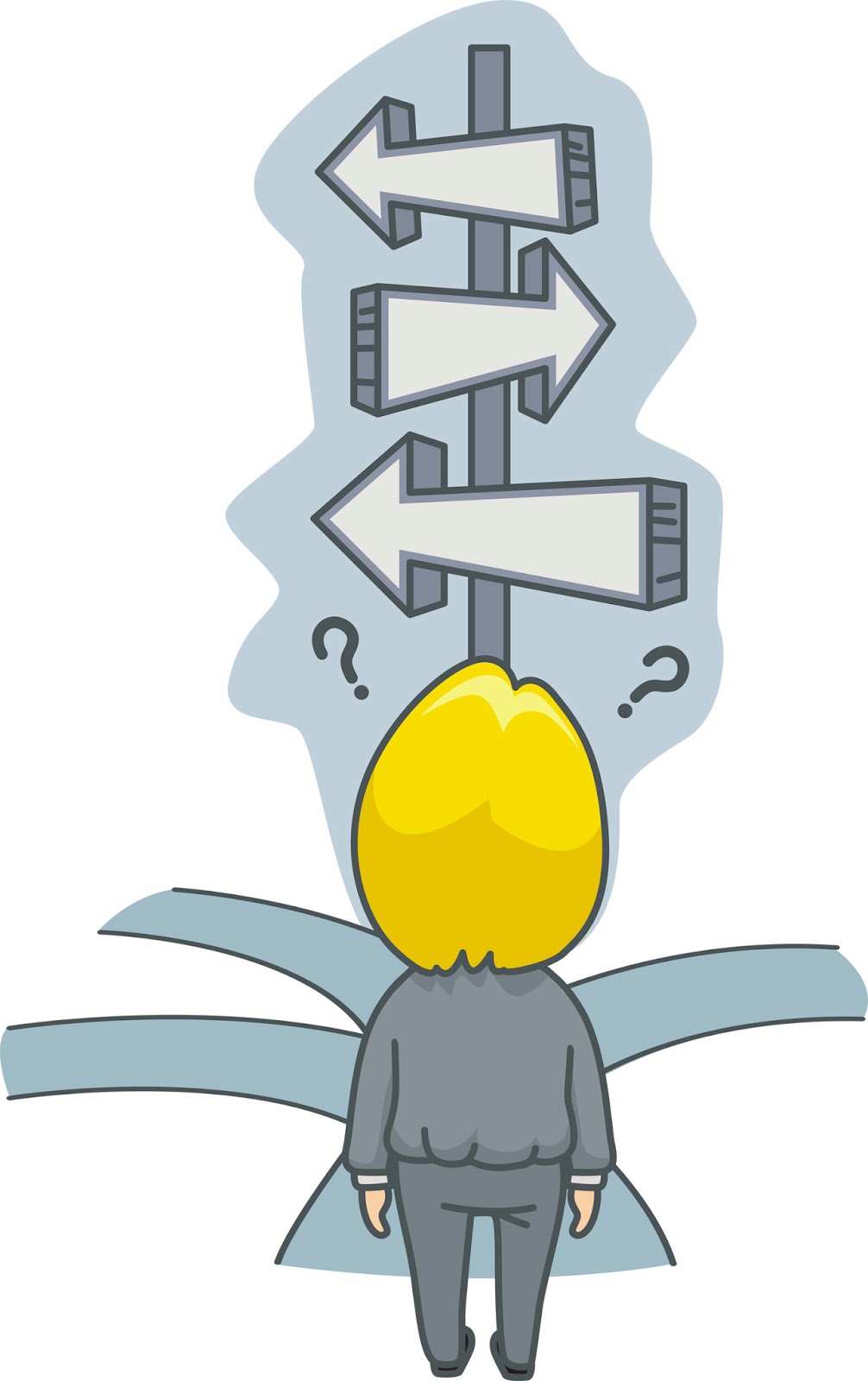
Once we see what is going on with us psychically, we can react accordingly. We do not always want to dismiss or counteract what has a hold of us. Some archetypes help us get through life’s difficulties by providing a model for how we should behave. Some elements of the shadow can be sources of great creativity and energy. But we do need to be aware of them so we are not “hijacked” by them.
An example of using amplification off the top of my head:
You’re talking to a friend and you say, “This morning I woke up and turned off my alarm rabbit.” You might look at what you associate with the rabbit. What gods are personified as rabbits. What attributes do rabbits have? What are other words for rabbit? What are other images like rabbits? What are famous rabbit images?
There is a famous trompe l’oeil trick of the eye drawing depending on how you look at it it’s either a rabbit ears or a ducks beak. 
So maybe the Jungian slip of rabbit is meant to take you to duck. Maybe it is meant to show you that time, like the rabbit duck image, can change depending on how you look at it. Or maybe it was just your subconscious warning you not to be late, 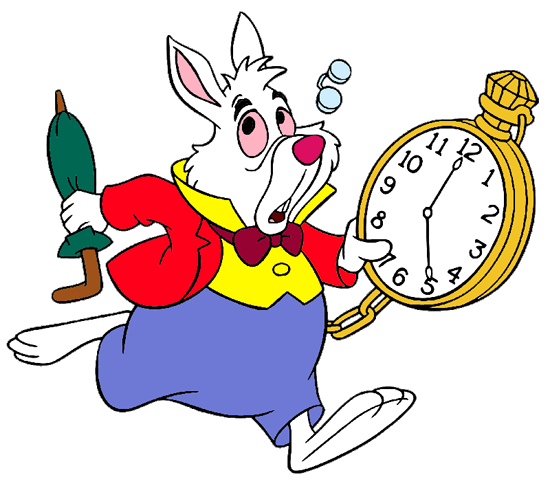 like the rabbit in Alice in Wonderland. Are you worried about being late to a specific appointment that week? Or late to doing something to save your marriage? Or late to writing that Great American Novel you were always planning to write?
  By starting with a seemingly trivial image from your daily life, amplification can help you learn what the psyche/soul is really worried about.
The post What is Amplification? appeared first on Jung.
]]>The post How does the shadow manifest? appeared first on Jung.
]]>The shadow makes itself known through projection  onto other people or eruption into your behavior.
  These can be dangerous, but are not necessarily so, which is why I hesitate to label the shadow negative as is common today.
How the shadow becomes negative is complicated. I describe archetypes as all imaginable experiences. You, as an individual, can live out only certain of those experiences/archetypes. The ones that you do not live out go into your shadow. They are defined as “not you.” But because you are human, you may equate those that are “not you” with those that are “not human.” The shadow is the source of beliefs such as “I am not X; therefore, no human should be X,” “being X is not good (for me); therefore, being X is not good (for anyone).” The shadow is also the part that says “I do not imagine myself as X; therefore, I must fight vehemently never to become X or let myself be seen as X.”  We will see later how those patterns live out.
The shadow erupts into your life when it has been repressed so strongly for so long that the only way it can make itself known is in a forceful display. One of the best examples I can remember is the anti-gay senator who was caught soliciting gay sex in an airport bathroom. He was so worried about being gay that he outwardly acted like he was anti-gay. The shadow is what chose a very public place and way for him to try to solicit gay sex. His gayness needed to come out, and if he wouldn’t see it, the shadow would make sure he had to see it (as did everyone else). Hitler, for example, was so afraid people would find out that his ancestor was Jewish that he committed genocide against them to prove his non-Jewishness.
How the shadow gets projected onto others is also after being repressed so strongly for so long. In projection, it’s as if a movie playing in the shadow of your mind thinks “I need a big screen on which to project this so I am seen.” Even schoolchildren know this pattern, with the cliched schoolyard comebacks, “Takes one to know one”  and “I know you are but what am I?” So, in the previous example, the senator denying his own homosexuality projected out onto other gays that they were “bad.” A politician who does not feel secure in his ability to lead, will accuse anyone who says he may not be a good leader of being “a traitor.” They have, in fact, merely voiced his own inner insecurity.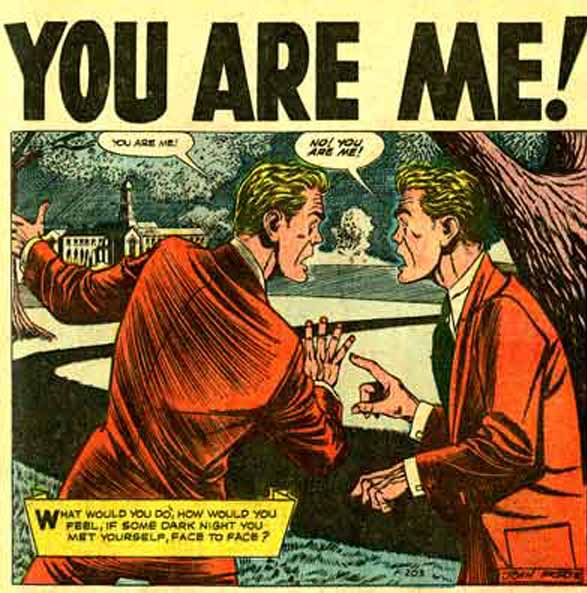
The post How does the shadow manifest? appeared first on Jung.
]]>